
7 Steps to Remove Coffee Stains From Office Carpet
Last Updated: November 24, 2026
Quick Summary
You remove coffee stains from office carpet by blotting up the liquid fast, then treating the spot with a mild solution and cold water. The method works on most commercial carpets if you act before the spill dries, since tannins bind to fibers as the spot dries.
- Blot the spill straight down and lift; rubbing spreads the stain sideways and grinds it into the pile.
- Mix a few drops of mild dish soap into a cup of cold water, since warm water can set some stains.
- For old stains, mix one part white vinegar with two parts cold water and let it sit five to ten minutes.
- A spill larger than a dinner plate or one that has sat more than a few hours needs extraction.
- Call a professional when a stain returns after two or three treatments or the carpet stays damp.
Table of Contents
- How Do You Remove Coffee Stains From Office Carpet?
- Step-by-Step: Blotting Up a Fresh Coffee Spill
- How to Get Old Coffee Stains Out of Carpet
- How to Remove Coffee Stains From Carpet With Vinegar
- How to Remove Coffee Stains From Office Carpet Without a Machine
- Choosing the Best Carpet Stain Remover for Coffee
- Preventing Dark Patches and Stain Recurrence
- When to Call FreshStart for Commercial Carpet Cleaning
- Frequently Asked Questions
How Do You Remove Coffee Stains From Office Carpet?
You remove coffee stains from office carpet by blotting up the liquid fast, then treating the spot with a mild solution and cold water.
Speed matters more than any product. Coffee is mostly water plus tannins, the plant compounds that give it color.
This guide covers supplies, blotting steps, old stain fixes, and when to call a pro.
Stain removal means lifting a substance out of carpet fibers without damaging the fiber or dye. Scrubbing pushes coffee deeper; lifting pulls it out.
What You Will Need Before You Start
Gather supplies before you touch the spill so the coffee does not soak deeper.
Here is your supply list:
- Clean white cloths or paper towels
- A spray bottle of cold water
- Mild dish soap, no bleach and no dyes
Skip anything labeled “oxy” or “bleach” until you have tested it.
Check the carpet tag or ask your facilities manager about fiber type. Most office carpet is nylon or a nylon blend, which handles water-based cleaning well; wool and some natural fibers need a gentler touch.
Step-by-Step: Blotting Up a Fresh Coffee Spill
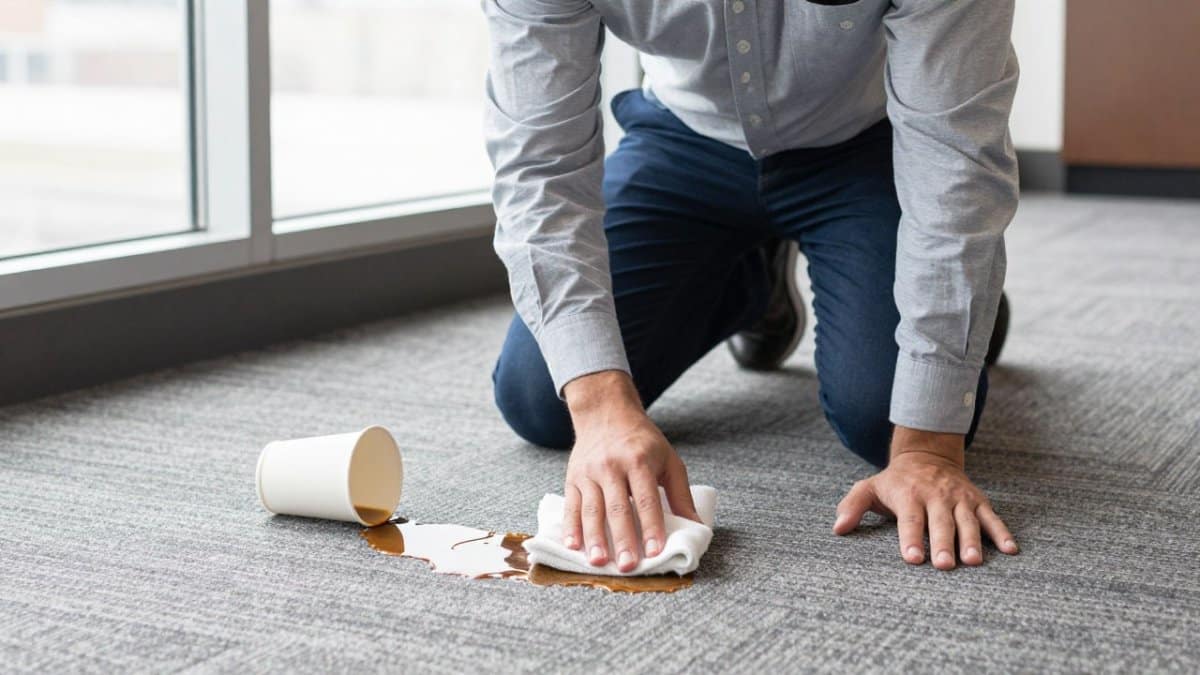
Blot the spill, do not rub it. Press a clean white cloth straight down and lift. Rubbing spreads the stain sideways and grinds it into the pile.
- Blot up the excess. Press a dry cloth or paper towel onto the spill. Hold it for a few seconds, then lift. Repeat with a clean section of cloth until no more liquid transfers.
- Scrape up solids. If the coffee had sugar or a flavor syrup, lift the sticky residue with a spoon. Do not press it in.
- Mix your solution. Add a few drops of mild dish soap to a cup of cold water. Warm water can set some stains, so stay cold.
- Apply lightly. Dab the solution onto the spot with a cloth. Do not pour it on. Oversaturation pushes coffee into the carpet backing and pad.
- Blot again. Press a clean cloth down and lift. Work from the outside edge of the stain toward the center so you do not spread it.
- Rinse with cold water. Dab clean water onto the spot and blot it up. This removes soap residue, which attracts dirt if left behind.
- Dry the area. Press a dry towel down and let the spot air-dry. Keep foot traffic off it until it is dry.
Watch out: the biggest mistake is pouring cleaner directly on the stain. That soaks the pad and causes the stain to wick back up as it dries.
How to Get Old Coffee Stains Out of Carpet
Old coffee stains need longer dwell time than fresh ones because the tannins have bonded to the fibers.
- Vacuum the area first to lift loose dirt.
- Mix one part white vinegar with two parts cold water.
- Spray the spot lightly and let it sit for five to ten minutes.
- Blot with a clean cloth, pressing firmly.
- Rinse with cold water and blot dry.
Repeat the cycle two or three times on a set-in stain. Patience beats pressure.
Troubleshooting Set-In and Dried Stains
If a stain will not budge after three rounds, change tactics, not force. Try these fixes:
- Still dark after vinegar? Switch to an oxygen-based cleaner made for carpets. Mix it per the label and follow the same blot-and-rinse method.
- Stain looks bigger after drying? That is wicking. The coffee rose from the pad. Treat it again with less liquid.
- Color looks bleached? Stop. You may have used too strong a product. Call a pro before it spreads.
Scrubbing harder frays the carpet pile and creates a fuzzy patch that shows under office lighting.
How to Remove Coffee Stains From Carpet With Vinegar
Vinegar’s mild acidity breaks the bond between tannins and carpet fibers, and it is safe for most synthetic office carpets.
Mix one part white vinegar with two parts cold water in a spray bottle. Test it on a hidden spot first, like a corner under a desk. Spray the stain lightly, let it sit five to ten minutes, then blot with a clean cloth.
- It is cheap and already in most offices.
- It leaves no soap residue.
- It handles light to medium stains well.
It has limits, though. Vinegar will not lift a heavy, set-in stain on its own, and the smell lingers for a while. Open a window and let the area air-dry fully.
How to Remove Coffee Stains From Office Carpet Without a Machine
You can clean a coffee stain without a machine using cloths, a spray bottle, and your hands. This works for small spots, but offices add variables: shared foot traffic, nearby furniture and electronics, and the need to keep the area usable.
Use the blot-and-lift method above as a pressure-and-absorption system rather than a wiping task. Repetition is key: apply, blot, rinse, blot. A stack of clean white cloths does the work a machine would, and pressure matters more than product.
Set Up the Area Before You Blot
A spill in a shared workplace needs a perimeter before it needs a cleaner. Follow this office response sequence:
- Protect nearby surfaces. Slide a trash bag or plastic sheet under the spill edge if coffee is pooling, and move chairs, cables, and paper bins out of splash range.
- Control foot traffic. Place a chair or temporary cone at the spill edge. One walk-through with a wet shoe can spread a six-inch stain into a two-foot patch.
- Notify facilities or the office manager. Log the spill so the next shift knows the area may be damp.
- Ventilate. Open a window or start a fan before applying liquid; low airflow is the main reason a treated spot stays damp and wicks back.
Use Pressure, Not Product Volume
A few tips make the no-machine method more effective:
- Use white cloths only; colored cloths can bleed dye onto wet carpet.
- Press down hard with your body weight, not just your arm.
- Change cloths often; a soaked cloth just moves coffee around and can redeposit tannins at the stain edge.
Watch out: pressing straight down on a sugar or syrup spill without lifting the solids first can grind sticky residue into the pile, which attracts soil and turns into a gray patch within days.
Know When No-Machine Cleaning Stops Working
Blotting by hand removes surface coffee but cannot pull liquid out of the backing and pad. A spill larger than a dinner plate, or one that has sat more than a few hours, leaves enough residue in the pad that hand blotting only clears the top layer.
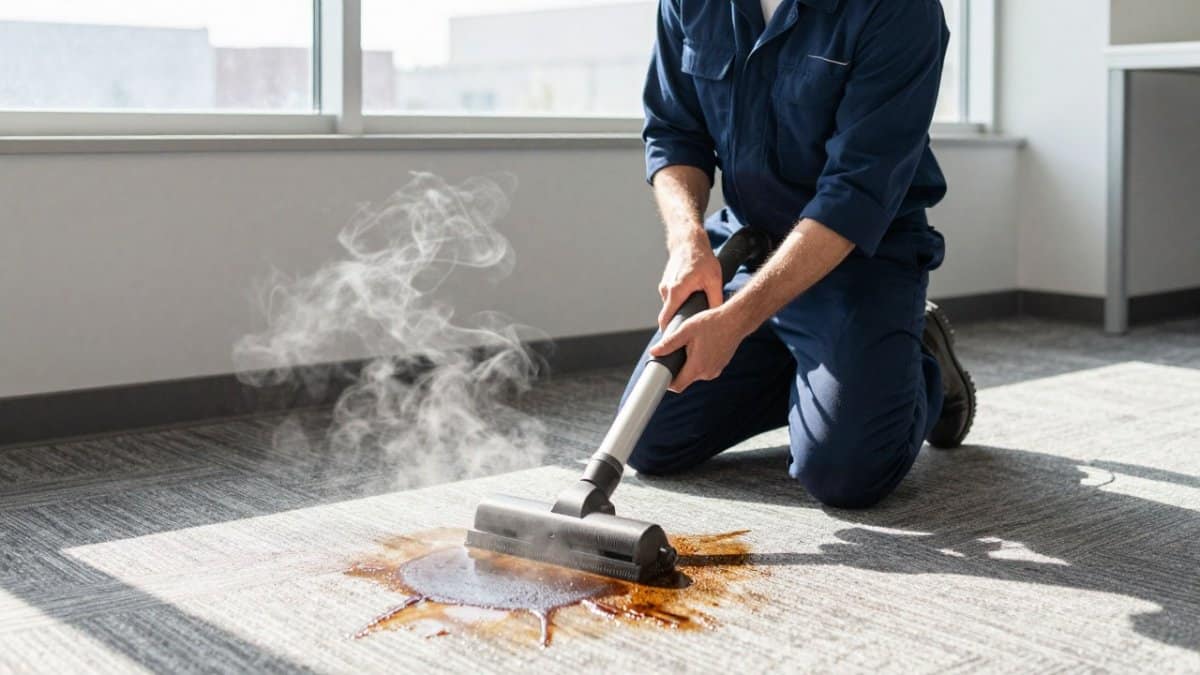
For a larger spill, a portable carpet cleaner or handheld extractor can pull more liquid out than blotting alone. Escalate to a professional when any of these are true:
- The spot covers an area larger than a standard office chair mat.
- The carpet feels damp more than 24 hours after treatment.
- The stain returns within a day of drying.
For a small, fresh spot, hand blotting with cold water and a mild solution is enough. For anything that meets the escalation criteria above, stop adding liquid and book extraction; more hand blotting on a soaked pad mostly pushes coffee deeper.
Choosing the Best Carpet Stain Remover for Coffee
The best carpet stain remover for coffee is a mild, oxygen-based cleaner or a simple dish soap and water mix, matched to your carpet fiber and to an occupied office.
Before you buy any product, read the label for these red flags:
- Bleach or sodium hypochlorite
- Strong solvents not meant for carpet
- “One-step” claims that skip rinsing
Some off-the-shelf spot removers can be stronger than needed, so read the label before use. Know the dangers of stain removal products before you spray anything on a shared office floor.
Workplace Safety and Product Selection
An office is not a workshop, and the product you choose has to fit the room. Use these criteria before you open the bottle:
- Ventilation. Choose low-VOC, low-odor formulas for enclosed offices and conference rooms. If the label says to use only with windows open, treat that as a scheduling constraint.
- Occupied-space residue. Low-residue products matter more in an office because staff walk the same path all day; soap left in the pile attracts soil and turns a clean spot into a dark traffic lane within a week.
- Slip hazard. Block the area until it is dry to the touch, not just dry-looking.
Carpet Fiber and Dye Compatibility
Nylon and polyester, the most common office fibers, handle water-based cleaners well. Wool and natural fibers need gentler products and less moisture, and solution-dyed carpets tolerate more than piece-dyed ones.
Always do a patch test first:
- Pick a hidden spot, like a corner or under furniture.
- Apply a small amount of cleaner.
- Wait ten minutes.
- Blot with a white cloth and check for color transfer.
If the cloth picks up dye, stop; that cleaner is too strong for your carpet.
Watch out: a cleaner that passes the patch test on nylon can still dull a wool blend or bleed a piece-dyed accent carpet, so test each fiber type in the office separately rather than assuming one result covers the floor.
Match the Product to the Coffee
Black coffee is mostly tannin and water, so a mild dish soap solution or diluted white vinegar handles most fresh spots.
For milk or cream, use mild dish soap and rinse twice with cold water; leftover protein can develop an odor as it breaks down.
If you are unsure which product fits the fiber and the spill, choose the mildest option, test it, and escalate to extraction rather than escalating to a stronger chemical.
Preventing Dark Patches and Stain Recurrence
A stain that comes back is usually wicking, not a new spill. Coffee trapped in the pad rises to the surface as the carpet dries, leaving a dark patch.
Prevent recurrence with these habits:
- Blot until the cloth comes up clean, not just damp.
- Rinse all soap residue out.
- Dry fast with airflow, a fan, or an open window.
For tougher stains you want to handle yourself, our guide to DIY stain removal tips to save your carpets covers more methods. Fast action and full drying are the two habits that stop most dark patches from forming.
When to Call FreshStart for Commercial Carpet Cleaning
Call a professional when a stain covers a large area, comes back after two or three treatments, or the carpet feels damp long after cleaning. Those signs mean coffee reached the pad, and surface cleaning will not fix it.
At FreshStart Cleaning Service, we use the RotoVac steam cleaning system to deep clean carpets and upholstery. Our eco-friendly, non-toxic cleaning solutions are safe for pets and children, and we are fully licensed and insured.
If you want to see what a deep clean involves, take a look at our carpet cleaning services. Once you book, our guide on what to do before carpet cleaners arrive helps you get the office ready, and you can read how long carpet takes to dry after steam cleaning so you can plan around it.
Here is a simple way to decide:
| Situation | DIY fix | Call a pro |
|---|---|---|
| Fresh spill, small spot | Blot and treat now | Not needed |
| Set-in stain, one or two tries | Vinegar or oxygen cleaner | If it returns |
| Large spill or soaked pad | Blot what you can | Yes, right away |
| Stain keeps coming back | Retry with less water | Yes |
| Whole-office refresh | Not practical | Yes |
A coffee spill does not have to leave a permanent mark on your office floor. The fix is speed, the right supplies, and knowing when to stop.
Frequently Asked Questions
Can old coffee stains be removed from carpet?
Old coffee stains are harder to lift than fresh ones because tannins bond to carpet fibers as they dry, but most set-in stains can be improved or removed. Start with a pretest in a hidden area, then apply a mild dish soap solution and blot repeatedly, working from the outside of the stain inward. For stubborn spots, a diluted white vinegar solution or an oxygen-based cleaner can help. Very old or large stains on commercial carpet often need a handheld extractor or professional steam cleaning to fully release.
Will dish soap remove coffee stains from carpet?
A few drops of mild, clear dish soap mixed with cold water removes many fresh coffee stains from office carpet. Apply the solution lightly with a clean cloth, blot rather than scrub, and rinse with clean water to remove residue. Skip dish soaps with bleach, dyes, or heavy degreasers, since those can discolor carpet fibers. If the stain persists after two rounds, switch to a vinegar solution or a dedicated carpet stain remover for coffee.
How do you remove dried coffee stains from office carpet without oversaturating it?
Work in small passes instead of pouring liquid directly on the carpet. Dampen a clean cloth with your cleaning solution and press it into the stain, then blot with a dry cloth. Repeat in thin layers, and use a fan or open windows to air-dry between passes. Oversaturation can soak into the carpet backing and cause wicking, where the stain reappears as a dark patch. Keep a pretest and a portable handheld extractor on hand for larger dried stains.
Does vinegar and baking soda remove old coffee stains from carpet?
Vinegar and baking soda can lift some old coffee stains, but the fizzing action is mostly mechanical and works best on surface residue. Mix one part white vinegar with two parts cold water, apply lightly, blot, then sprinkle a small amount of baking soda to absorb remaining moisture before vacuuming once dry. For deep tannin stains, an oxygen-based cleaner or professional extraction is more reliable. Always pretest on an inconspicuous area first.
