
7 Best Enzyme Cleaners for Pet Urine on Carpet
Last Updated: November 12, 2026
Quick Summary
The best enzyme cleaner for pet urine carpet contains enzymes or bacterial cultures that break down uric acid crystals at the source, not just mask the smell. Check the ingredient panel for specific enzymes or bacteria, since a cleaner labeled enzyme but listing only surfactants and perfume leaves uric acid crystals behind.
- Saturate the spot with enough enzyme cleaner to reach the padding, not just the surface.
- Let the cleaner dwell for the full time on the label before extracting.
- Use only low-foaming, residue-free enzyme cleaners labeled for machine use in a carpet shampooer.
- For old stains, repeat the cycle with full drying between rounds instead of one heavy soaking.
- If odor returns after drying, the urine has likely reached the pad and subfloor.
Table of Contents
- What to Look for in an Enzyme Cleaner for Pet Urine
- How to Use Enzyme Cleaner on Carpet for Fresh and Old Stains
- Enzyme Cleaner for Dog Urine Carpet Shampooer: Machine-Safe Picks
- Frequently Asked Questions
What to Look for in an Enzyme Cleaner for Pet Urine
The best enzyme cleaner for pet urine carpet should contain enzymes or bacterial cultures that break down uric acid crystals, not just mask the smell. Look for a formula with a label listing the specific enzymes or bacteria used.
Most pet accidents soak past the carpet fibers into the padding, so scent masking fails and the smell returns on humid days. An enzyme cleaner works on the organic matter at the source.
Watch out: a cleaner labeled “enzyme” but listing only surfactants and perfume lifts the surface stain and leaves uric acid crystals behind. Check the ingredient panel, not the front label.
How to Use Enzyme Cleaner on Carpet for Fresh and Old Stains
Using enzyme cleaner on carpet generally involves four steps: blot, saturate, wait, and extract. Fresh stains are usually easier to treat; old stains often need repeated saturation and longer dwell time.
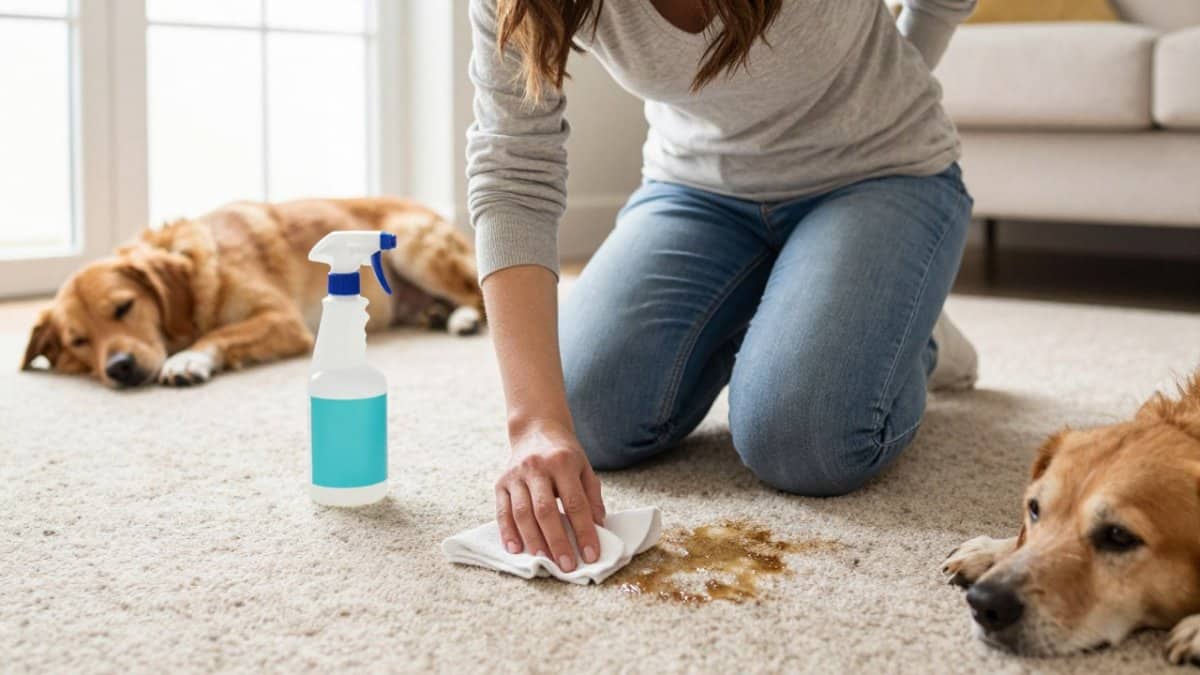
Start by blotting: press a clean cloth into the stain to pull up liquid. Do not rub, which pushes urine deeper and spreads the stain.
Then saturate the spot with enough enzyme cleaner to reach the padding, not just the surface. A light mist often will not reach the padding where the odor source sits.
Let it dwell for the full time on the label so the enzymes can work on the uric acid crystals before extraction.
Extract and dry: blot again or use a wet vacuum, then dry fully with airflow. A carpet that stays damp invites mold, a bigger problem than the original stain.
For old stains, repeating the cycle with full drying between rounds is often more effective than a single heavy soaking.
If a stain resists every DIY round, or the smell returns after drying, the urine has likely reached the pad and subfloor. Our guide on how to remove pet odors from carpet covers deeper cases, and our DIY stain removal tips help with fresh messes.
Enzyme Cleaner for Dog Urine Carpet Shampooer: Machine-Safe Picks
An enzyme cleaner for a dog urine carpet shampooer must be low-foaming and residue-free, or it will clog the machine and leave sticky fibers. Never pour a spray bottle product into a shampooer tank; use only cleaners labeled for machine use.
| Format | Best for | Watch out for |
|---|---|---|
| Low-foam enzyme concentrate | Rental and home shampooers | Must be diluted exactly as labeled |
| Enzyme pre-spray plus machine rinse | Heavy odor in padding | Needs dwell time before the rinse pass |
| Probiotic carpet cleaner | Ongoing maintenance | Slower acting than enzyme-only formulas |
Low-foam matters most: foam can trip the machine’s float switch and leave water in the carpet, lengthening drying time and raising mold risk. A residue-free formula also keeps the carpet from attracting dirt.
For scent-sensitive households, skip heavy fragrance. A mild or unscented formula still delivers odor neutralization without the perfumed overlay that bothers pets and children.
Watch out: machine cleaning pushes water deep into the pad. If the carpet does not dry within a day, run fans and ventilate the room to avoid mold.
When a machine pass still leaves odor, the source is under the carpet. Professional extraction with equipment that reaches the padding is the reliable fix. See the local carpet cleaning services we offer, or contact FreshStart Cleaning to schedule a visit.
Pet urine soaked into the padding can keep returning on warm days. FreshStart Cleaning Service uses the RotoVac steam cleaning system and eco-friendly, non-toxic cleaning agents that are safe for pets and children. As a locally owned and licensed and insured business, we tailor the clean to your carpet and household. Contact FreshStart Cleaning Service to discuss your carpet.
Frequently Asked Questions
What do professional carpet cleaners use on pet urine?
Professionals typically use enzyme-based treatments that break down uric acid crystals, followed by hot-water extraction with equipment like the RotoVac steam cleaning system. The enzyme dwell time matters more than the machine. FreshStart Cleaning Service uses eco-friendly, non-toxic agents that are safe for pets and children.
Do enzyme cleaners really work on dog urine?
Enzyme cleaners can be effective when used correctly. Many contain enzymes or bacterial cultures intended to act on the organic matter in urine. The key is saturation and dwell time: the carpet and padding need enough product and 10 to 15 minutes or more of contact time. For old or deep stains, a single application often is not enough, and professional extraction may be needed.
How long should you let an enzyme cleaner sit on carpet?
Most manufacturers recommend 10 to 15 minutes for fresh stains, and longer, sometimes several hours covered with a damp towel, for old or set-in stains. Do not let the product dry completely before blotting, and keep pets and children off the area until it is dry. If odor returns after drying, the crystals were not fully broken down and a second application or professional cleaning is the next step.
